
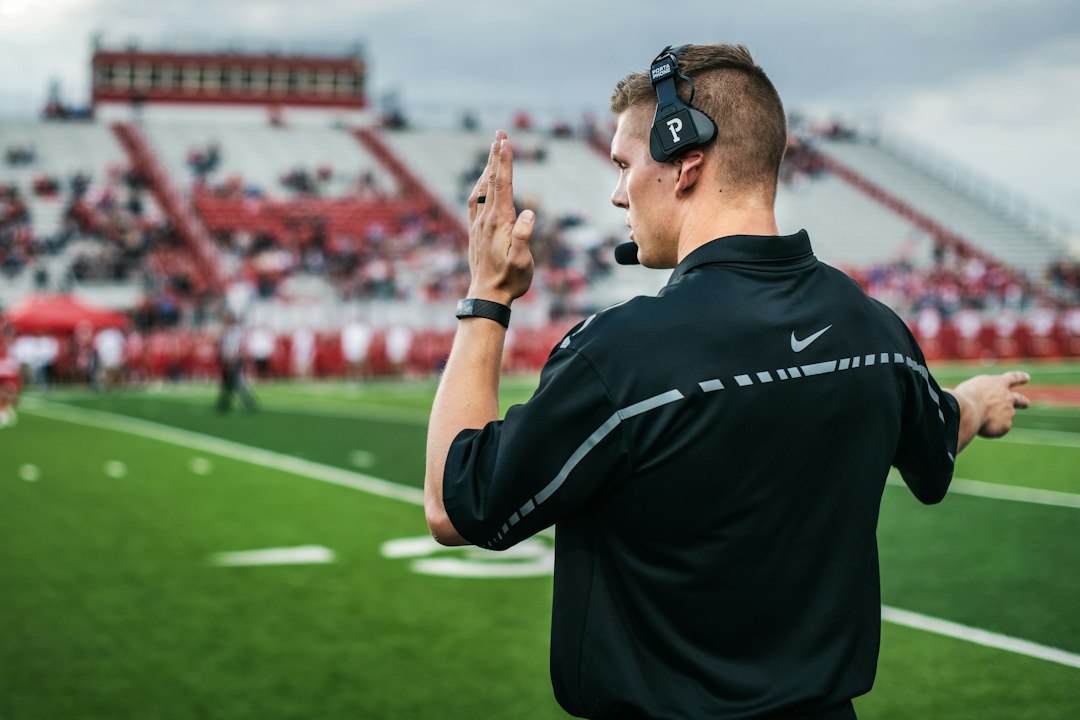
How does a football coach develop into a program leader?
A college football leader must understand the game, motivate athletes, coordinate coaching personnel, and make important decisions under pressure. These responsibilities require years of preparation and practical experience. Kevin Sumlin developed his career through a gradual progression that included playing collegiate football, working as an assistant coach, coordinating offensive strategies, and managing major football programs. His professional background offers an example of how experience and dedication contribute to leadership development.
What were the foundations of his football career?
Sumlin’s connection with college football began at Purdue University, where he played linebacker from 1983 to 1986. His time as a student-athlete introduced him to the demands of competitive football and the importance of teamwork.
Playing at the collegiate level helped him understand the relationship between preparation and performance. He experienced the importance of coaching instructions, individual responsibilities, and collective discipline.
After completing his playing career, he earned a degree in criminology and criminal justice from Purdue in 1988. He subsequently moved toward a professional career in coaching.
Where did he learn the fundamentals of coaching?
Washington State University became his first coaching destination, where he served as a graduate assistant. This role provided an introduction to the organizational and instructional responsibilities of the profession.
He later worked at Wyoming, Minnesota, and Purdue. His assignments included coaching wide receivers and quarterbacks, allowing him to develop specialized knowledge of offensive football.
These early positions were important because they exposed him to different players, coaching environments, and tactical approaches. They also helped him understand how individual instruction contributes to broader team performance.
How did his assistant coaching responsibilities grow?
Sumlin returned to Texas A&M as an assistant head coach and wide receivers coach before taking on offensive coordinator responsibilities.
He then joined Oklahoma, where he spent several seasons working with tight ends, special teams, and wide receivers. His eventual appointment as co-offensive coordinator represented a significant advancement.
At this stage, his responsibilities involved more than teaching individual techniques. He contributed to offensive strategy, preparation, and coordination, gaining experience that would become essential in a head coaching position.
What made his first head coaching position memorable?
Houston appointed Sumlin as its head coach in 2008. The opportunity represented the culmination of years spent learning different aspects of college football.
His leadership helped Houston become a competitive program within Conference USA. The team achieved division championships during his tenure, with the 2011 season standing out for its strong performances and 12-1 overall record.
His Houston experience demonstrated his ability to translate coaching knowledge into a broader program strategy.
Why was Texas A&M an important chapter?
In 2012, Sumlin took charge of Texas A&M. The program was entering the Southeastern Conference, presenting new challenges involving competition, preparation, and expectations.
Kevin Sumlin His first season was highly successful. The Aggies finished 11-2, earned a Cotton Bowl victory, and received national recognition for their performances.
One of the defining moments was quarterback Johnny Manziel winning the Heisman Trophy. The achievement highlighted the effectiveness of the team’s offensive development during that season.
Sumlin continued leading the Aggies through the 2017 campaign, gaining experience in one of college football’s demanding competitive environments.
What other leadership experiences followed?
Sumlin became Arizona’s head coach in 2018 and remained there through the 2020 season. He subsequently moved into professional spring football, leading the Houston Gamblers in 2022.
He later returned to college coaching at Maryland, serving as associate head coach, co-offensive coordinator, and tight ends coach during the 2023 and 2024 seasons. In October 2026, he was named head coach of the Dallas Renegades.
What can aspiring coaches learn from his career?
The career of Kevin Sumlin illustrates how professional football leadership develops through different responsibilities and experiences. His progression from graduate assistant to head coach demonstrates the importance of learning, adaptability, and understanding the many elements involved in managing a competitive football program.
What You Need to Know
- Kevin Sumlin’s football career began at Purdue University, where he played linebacker from 1983 to 1986.
- His first coaching position was as a graduate assistant at Washington State University, where he learned organizational and instructional responsibilities.
- Sumlin served as head coach at Houston starting in 2008, leading the program to division championships and a notable 12-1 season in 2011.
- In 2012, Sumlin became the head coach of Texas A&M, achieving an 11-2 season and guiding the team to a Cotton Bowl victory.
- After his tenure at Texas A&M, Sumlin became Arizona’s head coach in 2018 before moving to professional spring football and later returning to college coaching at Maryland.